Executive Summary
Moisture is a ubiquitous and potent threat to the stability of pharmaceutical products, often described as the "silent enemy" of the industry. Its pervasive presence can compromise drug efficacy, shorten shelf life, and, most critically, endanger patient safety. While often overlooked, the small packet of silica gel found in a medicine bottle is far from a mere afterthought. It represents a sophisticated, scientifically engineered component of a comprehensive quality assurance system. This report delves into the critical role of silica gel desiccants, exploring the science of moisture-induced degradation, the unique mechanism of silica gel, its strategic advantages over other desiccant technologies, and its essential function within the regulated pharmaceutical supply chain. By understanding the intricate link between effective moisture control and product integrity, pharmaceutical stakeholders can appreciate that the desiccant is not a simple accessory but an indispensable guardian of patient trust and brand reputation.
The stability of a pharmaceutical product is a complex interplay of its chemical composition and its surrounding environment. Of all the environmental factors—including temperature, light, and oxygen—moisture presents a particularly insidious challenge. High humidity, a measure of the amount of water vapor in the air, can initiate a cascade of physical, chemical, and biological degradation pathways that render a medication ineffective or even harmful. The problem is not merely the presence of moisture but its "availability" to participate in reactions, a concept known as water activity. Many active pharmaceutical ingredients (APIs) and excipients—the inactive substances in a drug formulation—are highly hygroscopic, meaning they readily absorb moisture from the atmosphere, making them particularly vulnerable to this form of degradation.
Water activity is a fundamental concept in pharmaceutical stability. It refers to the free, unbound moisture that is available to drive degradation reactions. Unlike bound moisture, which is an intrinsic part of a compound’s crystalline structure and does not readily participate in reactions, unbound moisture can act as a solvent or a catalyst, accelerating a wide range of damaging processes. This principle explains why a drug might remain stable in one environment but rapidly degrade in another with a seemingly similar moisture content. The difference lies in the accessibility of the moisture to the drug substance. Controlling this available moisture is the primary objective of pharmaceutical desiccants and a core component of a robust packaging strategy.
Moisture's impact on a drug’s stability can be categorized into three major pathways: chemical, physical, and biological degradation.
Chemical Degradation: The most common moisture-induced chemical reaction is hydrolysis, where a drug molecule is broken down by its reaction with water. This can fundamentally alter the drug’s structure, leading to a loss of potency or the creation of inactive or even toxic byproducts. Aspirin is a classic example of a drug highly susceptible to acid-catalyzed hydrolysis when exposed to moisture. In addition, moisture can facilitate oxidation reactions, especially in the presence of metal ions, which can also diminish drug potency and generate undesirable degradation products.
Physical Degradation: Beyond chemical changes, moisture can have a significant effect on the physical properties of solid dosage forms. For hygroscopic powders, granules, and tablets, moisture absorption can lead to caking, softening, and clumping, which affects their flowability and can compromise accurate dosing. High humidity can also alter a drug's dissolution rate, which is the speed at which it dissolves in the body. If this rate is compromised, it can affect the drug's bioavailability—the proportion of the drug that enters the circulation and has an active effect. Moreover, moisture can alter the crystalline structure, or polymorphism, of a drug, which can change its physical properties and overall stability.
Biological Degradation: Moist environments are ideal breeding grounds for microorganisms. High humidity creates the perfect conditions for the proliferation of bacteria, mold, and fungi, which can contaminate pharmaceutical products and pose a significant risk to patient safety. This is a particularly critical concern, as contamination can lead to infections and allergic reactions, highlighting the multifaceted nature of the moisture threat.
The repercussions of moisture-induced degradation extend far beyond a drug's visual appearance. When a medication loses its potency or is chemically altered, it may no longer provide its intended therapeutic effect, a life-threatening scenario for patients relying on drugs for conditions like heart disease or diabetes. In some cases, the degradation can produce harmful, toxic byproducts, directly jeopardizing patient health.
From a commercial perspective, the financial and reputational damage of inadequate moisture control is substantial. It can lead to a reduced shelf life, resulting in increased product waste, costly returns, and, in the most severe cases, nationwide recalls. These failures signal a lapse in a company's commitment to quality and safety, leading to a loss of consumer trust. Regulatory bodies such as the U.S. Food and Drug Administration (FDA) enforce strict Good Manufacturing Practices (GMP) and require robust stability testing to ensure product quality and safety. A failure to provide sufficient data on how packaging performs under varying humidity and temperature conditions, as outlined by ICH guidelines, can delay or prevent a drug's market approval. This highlights that effective moisture control is not just a best practice but a fundamental regulatory requirement.
The problem of moisture is not simply about keeping a drug "dry" but about maintaining a stable chemical and physical state throughout the product's entire lifecycle. This requires a proactive strategy that understands that humidity can initiate a cascade of degradation reactions that ultimately compromise drug efficacy and patient safety. Therefore, the strategic use of desiccants is a critical component of a drug's safety and effectiveness profile, mandated by regulatory bodies to protect consumers and uphold industry standards.
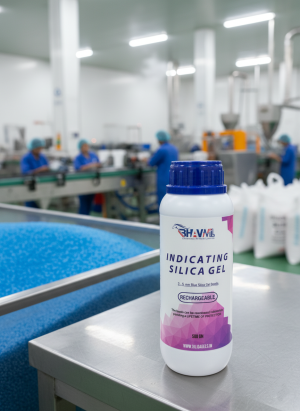
The small packet of beads, so often discarded without a second thought, is a testament to sophisticated material science. Silica gel, a highly porous form of silicon dioxide, is a desiccant, a substance designed to create and maintain a dry environment within a closed space. Its function is critical in protecting moisture-sensitive products, particularly pharmaceuticals.
The cautionary "DO NOT EAT" warnings found on silica gel packets often lead to the misconception that the contents are toxic. In reality, silica gel is non-toxic, non-flammable, non-reactive, and has been approved by the US government for use in both food and drug packaging. The warnings serve a dual purpose: to prevent accidental ingestion, especially by children, as the packets themselves can be a choking hazard, and to prevent the mistaken use of the beads as an additive. The primary function is desiccation, and its presence signals an intentional effort to preserve product quality and safety.
Silica gel's effectiveness is not a simple "sponge effect" but rather a nuanced interplay of its physical structure and a process known as adsorption.
Physical Structure: Silica gel is a partially dehydrated, amorphous material composed of tiny, nano-porous beads. Its manufacturing process, which involves carefully controlled washing, aging, and drying, creates a vast network of interconnected microscopic pores. This gives the material an extraordinarily large internal surface area, often cited as up to 800 square meters per gram, allowing it to trap and hold a significant amount of water vapor in a small volume.
The Mechanism of Adsorption: The mechanism of moisture removal by silica gel is physical adsorption, where water molecules adhere to the pore surfaces through Van der Waals interactions and hydrogen bonds. As humidity increases, water vapor enters the pores and condenses into a liquid at a lower pressure than would be required in the open air, a phenomenon known as capillary condensation. This process effectively isolates the water molecules, preventing them from interacting with the surrounding products. A key characteristic of this mechanism is that silica gel remains physically dry even at its maximum capacity, which can be up to 40% of its own weight. This "dry-at-maximum-capacity" feature is critically important for pharmaceutical applications as it eliminates the risk of a liquid medium coming into contact with the drug product.
Silica gel's capacity to remove moisture is not just a matter of its size but a direct consequence of its engineered micro-porous structure and the surface chemistry of its silicon dioxide material. The manufacturing process is meticulously controlled to manipulate key physical parameters, such as pore size, porosity, and surface area, which in turn determine the desiccant's performance. This highlights that the material’s effectiveness is not accidental but a result of deliberate design, making it a reliable tool for moisture control in the pharmaceutical industry. The process of adsorption, where moisture adheres to the surface rather than dissolving into the material, is a crucial distinction that prevents the water from becoming an active liquid medium, a significant advantage over other desiccant types.
While silica gel is the most widely recognized desiccant in pharmaceutical packaging, it is part of a larger family of moisture-absorbing technologies. The choice of desiccant is a critical engineering decision, not a simple commodity purchase. It depends on a drug’s specific moisture sensitivity, its required storage conditions, and the cost-effectiveness of the solution.
Silica gel and molecular sieves are both solid, non-toxic desiccants that operate via adsorption. However, their performance profiles differ significantly, particularly at low relative humidity (RH). Silica gel's water absorption capacity increases with rising ambient humidity, and it is a more cost-effective option. Molecular sieves, composed of crystalline aluminosilicates, are superior at binding moisture at very low RH, even below 10%. This makes them the ideal choice for products that require an extremely dry environment, such as certain diagnostic test kits or freeze-dried biologics. The adsorption force of molecular sieves is stronger than that of silica gel, which means they hold onto moisture more tightly as temperatures rise, whereas silica gel can lose some of its capacity. The strategic consideration, therefore, is whether the product can tolerate some residual moisture (where silica gel is ideal) or requires a deep, rapid drying effect (where molecular sieves are preferred).
Calcium chloride is another desiccant used in various industries, and its comparison with silica gel highlights the critical difference between adsorption and absorption. While silica gel operates by adsorption, remaining a solid particulate material, calcium chloride is a hygroscopic and deliquescent substance. It absorbs moisture by chemically reacting with water molecules, dissolving into a liquid or gel. In high-humidity environments (90% RH), calcium chloride can absorb over 250% of its weight in moisture, outperforming silica gel by a factor of 10. However, its liquid nature after moisture uptake makes it generally unsuitable for direct inclusion in pharmaceutical packaging where drug-to-liquid contact is a critical contamination risk. The physical state of the desiccant after it has done its job is a key performance metric for pharmaceutical applications, and silica gel's ability to remain a dry solid at full capacity gives it a significant advantage in maintaining the integrity of oral solid dosage forms.
The desiccant industry is continually evolving with new technologies that integrate moisture control directly into the packaging itself. Innovations like DNP's Moisture Absorbing Laminate embed desiccants into a polyolefin-based film resin. This provides a wide-area moisture absorption effect that is not limited to a single point, a benefit that traditional packets cannot offer. This approach simplifies the packaging process by eliminating the need for a separate desiccant insertion step, and it also mitigates the risk of accidental ingestion, a key safety concern. Another trend is the development of hybrid solutions, such as PharmaKeep™, which can absorb both moisture and oxygen. This two-in-one approach addresses multiple degradation threats simultaneously, making it an advanced solution for complex drug formulations like biologics that are sensitive to both humidity and oxidation. These innovations demonstrate that the choice of desiccant is a strategic, performance-based engineering decision tied directly to a drug's specific needs and its intended supply chain conditions.
The selection of a desiccant is not a "one-size-fits-all" decision. It requires a nuanced understanding of a drug's specific moisture sensitivity and the environmental conditions it will face. A successful strategy involves a careful consideration of the trade-offs between cost, capacity, and the physical properties of the desiccant itself.
| Desiccant Type | Mechanism | Physical State (when saturated) | Performance in Low RH (<10%) | Performance in High RH (>50%) | Cost | Primary Applications |
| Silica Gel | Absorption | Solid/Dry | Moderate | High | Moderate | General-purpose, tablets, capsules |
| Molecular Sieves | Absorption | Solid/Dry | High | High | High | Highly sensitive products, low RH required |
| Calcium Chloride | Absorption | Liquid/Gel | Low | Very High | Low | Not common in pharmaceutical packaging due to liquefaction risk |
| Montmorillonite Clay | Adsorption | Solid/Dry | Low | Moderate | Very Low | Cost-effective, moderate moisture control |
The desiccant packet is not an isolated product but a critical, validated component of a larger, regulated system designed to guarantee drug quality throughout its entire lifecycle. Its journey begins long before it is placed into a bottle, spanning from the manufacturing floor to the patient’s home.
The pharmaceutical industry operates under stringent regulatory oversight. Regulatory bodies, including the FDA, mandate that manufacturers maintain optimal environmental levels in storage and production facilities and that they use continuous recording equipment to monitor conditions. As a component of the drug’s container closure system, the desiccant must be thoroughly validated, and its performance data must be included in regulatory submissions. This is not a trivial detail; the absence of data on how a desiccant and its packaging perform under ICH conditions (International Council for Harmonisation) for temperature, humidity, and transport can significantly delay or prevent product approval. This requirement demonstrates that the desiccant is a foundational element of the regulatory strategy and not an optional accessory.
The desiccant plays a vital role at every stage of a drug's life:
Manufacturing: From the moment raw materials are exposed to the ambient air, they are at risk. Desiccants are used in manufacturing environments, such as cleanrooms, to control humidity and prevent issues like powder clumping or deterioration of sensitive raw materials.
Packaging and Transport: Once a drug is manufactured, it is sealed in a hermetic container with a desiccant packet or canister. This creates a controlled microenvironment that protects the product from external humidity during shipping and long-term storage, a passive and continuous layer of protection.
Consumer Use: The desiccant's job does not end when the product is opened. Every time a consumer opens a bottle to retrieve a tablet, moisture from the ambient air enters the container. The desiccant continues to work by absorbing this new moisture, ensuring that the remaining tablets are protected for the duration of the drug’s use. This continued function is essential for drugs that are used over an extended period.
A robust packaging strategy, which includes the correct desiccant, is a fundamental necessity for patient safety and product efficacy. When packaging has structural defects or weak seals, it can expose medications to moisture, compromising their stability and shortening their shelf life. By incorporating a desiccant, a company signals its commitment to patient safety and product quality. This commitment is the basis for consumer trust, which is a core component of brand reputation in the pharmaceutical industry. The desiccant serves as a microcosm of the entire pharmaceutical quality assurance system. Its presence is the result of a complex, multi-stage process involving regulatory approval, quality control, and stability testing. This simple packet is a physical manifestation of a company's dedication to ensuring that its product remains safe and effective from the moment it leaves the factory until the last dose is taken.
The importance of silica gel desiccant in medicine packaging cannot be overstated. The research shows that this seemingly simple component is a scientifically engineered, FDA-approved part of a comprehensive system designed to combat the pervasive threat of moisture. From the lab bench to the patient’s medicine cabinet, a desiccant provides a vital layer of protection against the degradation pathways that can compromise a drug's stability, efficacy, and safety.
The analysis has moved beyond the simple concept of keeping a product "dry" to a deeper appreciation of the strategic, performance-based choices that govern desiccant selection. The choice between silica gel, molecular sieves, and other technologies is a critical engineering decision, tied directly to a drug's unique properties and its required storage conditions. A one-size-fits-all approach to moisture control is insufficient and can lead to product instability and significant commercial risks.
Ultimately, a robust moisture control strategy is a non-negotiable component of a modern, patient-centric pharmaceutical supply chain. It represents a strategic investment that not only ensures regulatory compliance but also safeguards product integrity, reduces waste, and, most importantly, protects patient health. The presence of a desiccant in a medicine bottle is a quiet assurance—a small, unseen guardian that guarantees the medication is just as safe and effective as its manufacturer intended.