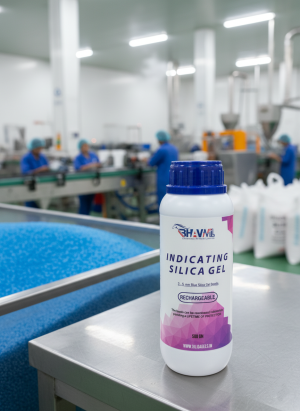
Silica gel adsorbents are widely acknowledged as one of the most effective adsorbents for column chromatography. It has a high absorption proclivity, is commercially available in a variety of formats and sizes, and the manufacturers have done extensive research and know how to use it in a variety of applications, especially chromatography.
The use of silica gel in chromatography has many benefits.
The fact that silica gel is non-toxic and does not interfere with the compounds that move through it is one of the most significant benefits of using it in chromatography. Throughout the service, it retains its own stable base. It may also be regenerated or reused several times, reducing purification costs dramatically. All it takes is heating it to a certain temperature (around 150 degrees Celsius) to extract all of the compounds it has ingested.
Silica gel is a polar adsorbent with a powerful capacity to absorb essential contents that might be present in the sample that requires isolation or purification due to its strong acidic nature. Its function in reversed-phase partition chromatography is also well-known. Among other aspects, it can be used to purify lipids, steroids, amino acids, a variety of dyes, and alkaloids, as well as a variety of other medicinal processes.
Another benefit of using silica gel in column chromatography is that it is possible to achieve the exact particle size needed for a particular technique.
For the separation and analysis of complex mixtures, chromatography has advanced to include a host of other tests and modifications, the most important of which is silica gel. Chromatography has made substantial strides in the method of distinguishing and defining a material found in a mixture over the years. Silica gel is commonly considered to be one of the most versatile and efficient chromatography additives on the market.
Another feature of silica gel is that it can be used to remove molecules that have been synthesised or that exist spontaneously. The basic procedure includes using silica gel chromatography to isolate the various components of the purification mixture.